It started with an exciting and busy work week in Europe. The first law of global health never changes: We learn best when we learn from each other. London, Geneva and Madrid each had a story to tell about the current state of healthcare in the United Kingdom and Europe, where old systems are straining and market‑responsive models are emerging.
My first stop was London for the board meeting of our newly established Cedars‑Sinai clinic in London and meetings with our partners at Guy’s and St Thomas’ NHS Foundation Trust. Our Cedars‑Sinai clinic on Wimpole Street is now fully operational and the state-of-the-art flagship facility is on schedule to open next spring in the Harley Street Health District.
We had invigorating conversations about the future with leadership across London. It was my privilege to meet Amanda Pritchard, the new chief executive of Guy’s and St Thomas, who until recently led NHS England. Her message was candid: The public system remains the bedrock of British healthcare, but to remain viable it needs sustainable new revenue streams and elevated clinical offerings. She and her colleagues don’t view private care as a threat. Instead, done thoughtfully and in partnership, it will be part of the answer.
This was music to our ears. Cedars‑Sinai International’s goal is to complement the NHS, not compete with it.
From London, I flew to Geneva for the International Hospital Federation’s (IHF) World Hospital Congress. The IHF was created almost 100 years ago and has been historically quite Eurocentric. No longer. Under the leadership of CEO Ron Lavater, an American with deep experience at HCA Healthcare and Johns Hopkins Medicine and in the United Arab Emirates health sector, the IHF has gone increasingly global.
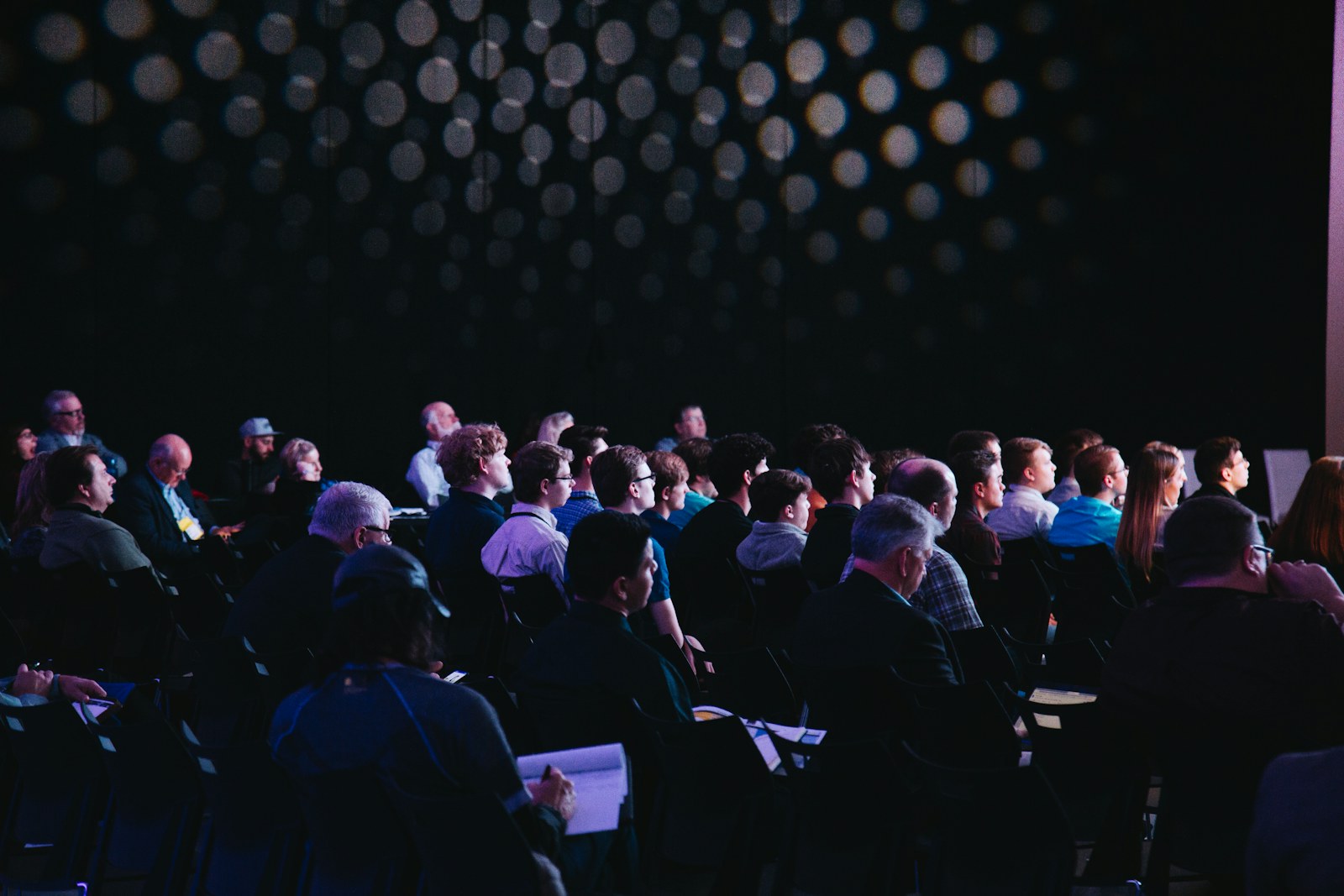
The energy at this year’s congress was fantastic, with delegates from six continents, Gulf institutions playing leading roles and a program that blended rigorous academic exchange with practical problem‑solving. I was on a patient-centered care panel with European hospital leaders and a patient advocate. They described the challenging realities on the ground—long waiting lists, workforce exhaustion, budget pressures—yet the room was alive with optimism. People are no longer just describing problems; they are working together to create solutions. IHF is championing the global nature of 21st century healthcare and navigating its headwinds.
Madrid was electrifying. If London is carefully recalibrating and Geneva is taking stock, Madrid is surging forward. Globalization and post‑pandemic realities have intensified expectations for service, speed and experience in healthcare. Private capital is flowing in to create new hospitals and clinics.
Through luck, serendipity and maybe a bit of planning, my life these days is filled with global healthcare, brilliant colleagues and football (all kinds), of course. My stay in Madrid was enriched by two legendary European football clubs: Real Madrid and Atlético Madrid. At the Santiago Bernabéu, we were graciously hosted by Anas Laghrari, the strategic right hand of club president Florentino Pérez and widely seen as a future leader of Real Madrid. The club is owned by its 100,000 “socios”—members of the public—and functions as a civic institution as much as a sporting one. Their ambition is far‑reaching: integrating world-class healthcare and wellness into their ecosystem to benefit elite athletes and the broader community. The following day, we met with the leadership of Atlético Madrid, including the club’s long-serving medical director José Maria Villalón, who also cares for the Spanish national team. We spoke about the importance of health and wellness for the community beyond elite athletes, as well as the critical need for more rigorous standards and accreditation in sports medicine.
Those two days left me on cloud nine. The conversations with these two legendary organizations revolved around creating high‑value, high-touch care for athletes who routinely travel the globe and then bringing that level of excellence to everyday patients.
Madrid gave me a kinetic reminder of how interconnected our world has become. The U.S. National Football League took over the Bernabéu for a regular‑season game between the Washington Commanders and the Miami Dolphins during our stay. As a crazed fan of both American football and soccer, it was downright thrilling to watch the American gladiators churn up the same turf where Kylian Mbappé and Vinícius Jr. dance.
Europe is undergoing a tectonic shift in the relationship between public and private healthcare. Leaders in public systems who once viewed private medicine with suspicion are now asking how they can harness private innovation and investment without diminishing the physician‑patient relationship or sacrificing institutional equity. Purely corporate models will not be the answer. Sooner or later, unfettered profit-seeking erodes trust. Public systems are looking for allies, not adversaries.
Cedars‑Sinai International believes in collaboration. We listen with care to local physicians, nurses and patients and then offer clinical expertise, operational rigor and patient‑centric systems that measure success by the benefits they provide to the people in our care. In London, we work inside the NHS system. In Madrid, we are exploring how an academic medical center rooted in compassionate, physician-led care could produce something entirely new for a global sporting community.
Every trip I take shows me that the future of global healthcare doesn’t belong to any single country or model. It belongs to those who are willing to cross barriers—geographic, cultural, ideological—with open minds and hearts and a genuine desire to serve patients.
When I returned to Los Angeles, I felt grateful for the tireless colleagues who travel these roads with me and our partners around the world, who keep teaching us what excellence looks like in different cultures. We’re on a vital path together. Healthcare is becoming more collaborative, more patient‑centered and more human. It’s a new day.
It started with an exciting and busy work week in Europe. The first law of global health never changes: We learn best when we learn from each other. London, Geneva and Madrid each had a story to tell about the current state of healthcare in the United Kingdom and Europe, where old systems are straining and market‑responsive models are emerging.
My first stop was London for the board meeting of our newly established Cedars‑Sinai clinic in London and meetings with our partners at Guy’s and St Thomas’ NHS Foundation Trust. Our Cedars‑Sinai clinic on Wimpole Street is now fully operational and the state-of-the-art flagship facility is on schedule to open next spring in the Harley Street Health District.
We had invigorating conversations about the future with leadership across London. It was my privilege to meet Amanda Pritchard, the new chief executive of Guy’s and St Thomas, who until recently led NHS England. Her message was candid: The public system remains the bedrock of British healthcare, but to remain viable it needs sustainable new revenue streams and elevated clinical offerings. She and her colleagues don’t view private care as a threat. Instead, done thoughtfully and in partnership, it will be part of the answer.
This was music to our ears. Cedars‑Sinai International’s goal is to complement the NHS, not compete with it.
From London, I flew to Geneva for the International Hospital Federation’s (IHF) World Hospital Congress. The IHF was created almost 100 years ago and has been historically quite Eurocentric. No longer. Under the leadership of CEO Ron Lavater, an American with deep experience at HCA Healthcare and Johns Hopkins Medicine and in the United Arab Emirates health sector, the IHF has gone increasingly global.
The energy at this year’s congress was fantastic, with delegates from six continents, Gulf institutions playing leading roles and a program that blended rigorous academic exchange with practical problem‑solving. I was on a patient-centered care panel with European hospital leaders and a patient advocate. They described the challenging realities on the ground—long waiting lists, workforce exhaustion, budget pressures—yet the room was alive with optimism. People are no longer just describing problems; they are working together to create solutions. IHF is championing the global nature of 21st century healthcare and navigating its headwinds.
Madrid was electrifying. If London is carefully recalibrating and Geneva is taking stock, Madrid is surging forward. Globalization and post‑pandemic realities have intensified expectations for service, speed and experience in healthcare. Private capital is flowing in to create new hospitals and clinics.
Through luck, serendipity and maybe a bit of planning, my life these days is filled with global healthcare, brilliant colleagues and football (all kinds), of course. My stay in Madrid was enriched by two legendary European football clubs: Real Madrid and Atlético Madrid. At the Santiago Bernabéu, we were graciously hosted by Anas Laghrari, the strategic right hand of club president Florentino Pérez and widely seen as a future leader of Real Madrid. The club is owned by its 100,000 “socios”—members of the public—and functions as a civic institution as much as a sporting one. Their ambition is far‑reaching: integrating world-class healthcare and wellness into their ecosystem to benefit elite athletes and the broader community. The following day, we met with the leadership of Atlético Madrid, including the club’s long-serving medical director José Maria Villalón, who also cares for the Spanish national team. We spoke about the importance of health and wellness for the community beyond elite athletes, as well as the critical need for more rigorous standards and accreditation in sports medicine.
Those two days left me on cloud nine. The conversations with these two legendary organizations revolved around creating high‑value, high-touch care for athletes who routinely travel the globe and then bringing that level of excellence to everyday patients.
Madrid gave me a kinetic reminder of how interconnected our world has become. The U.S. National Football League took over the Bernabéu for a regular‑season game between the Washington Commanders and the Miami Dolphins during our stay. As a crazed fan of both American football and soccer, it was downright thrilling to watch the American gladiators churn up the same turf where Kylian Mbappé and Vinícius Jr. dance.
Europe is undergoing a tectonic shift in the relationship between public and private healthcare. Leaders in public systems who once viewed private medicine with suspicion are now asking how they can harness private innovation and investment without diminishing the physician‑patient relationship or sacrificing institutional equity. Purely corporate models will not be the answer. Sooner or later, unfettered profit-seeking erodes trust. Public systems are looking for allies, not adversaries.
Cedars‑Sinai International believes in collaboration. We listen with care to local physicians, nurses and patients and then offer clinical expertise, operational rigor and patient‑centric systems that measure success by the benefits they provide to the people in our care. In London, we work inside the NHS system. In Madrid, we are exploring how an academic medical center rooted in compassionate, physician-led care could produce something entirely new for a global sporting community.
Every trip I take shows me that the future of global healthcare doesn’t belong to any single country or model. It belongs to those who are willing to cross barriers—geographic, cultural, ideological—with open minds and hearts and a genuine desire to serve patients.
When I returned to Los Angeles, I felt grateful for the tireless colleagues who travel these roads with me and our partners around the world, who keep teaching us what excellence looks like in different cultures. We’re on a vital path together. Healthcare is becoming more collaborative, more patient‑centered and more human. It’s a new day.